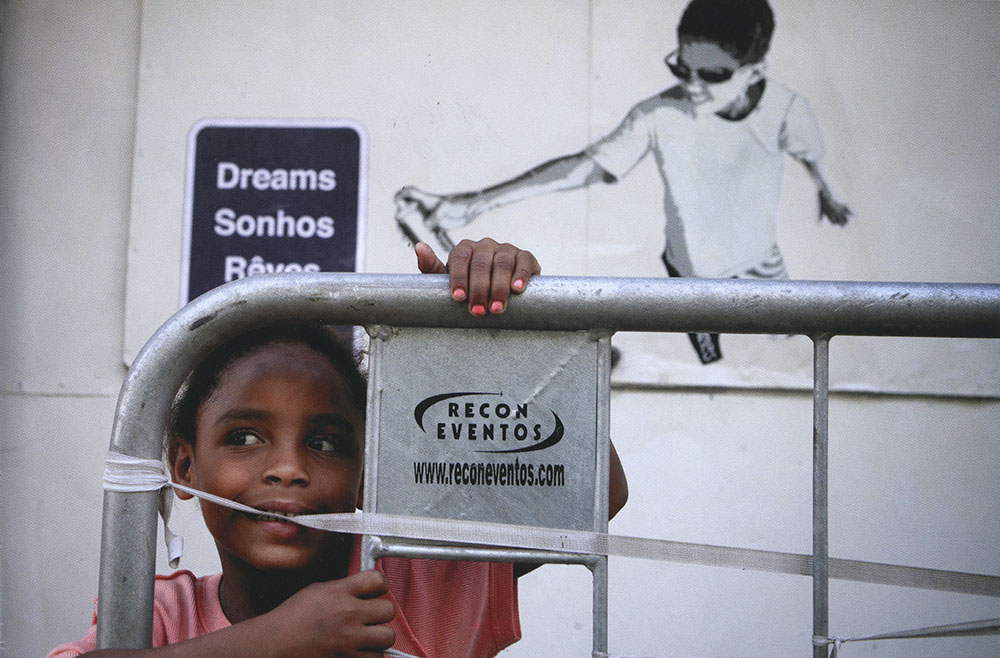
PUBLICATIONS PRESS:
CONTINUE___
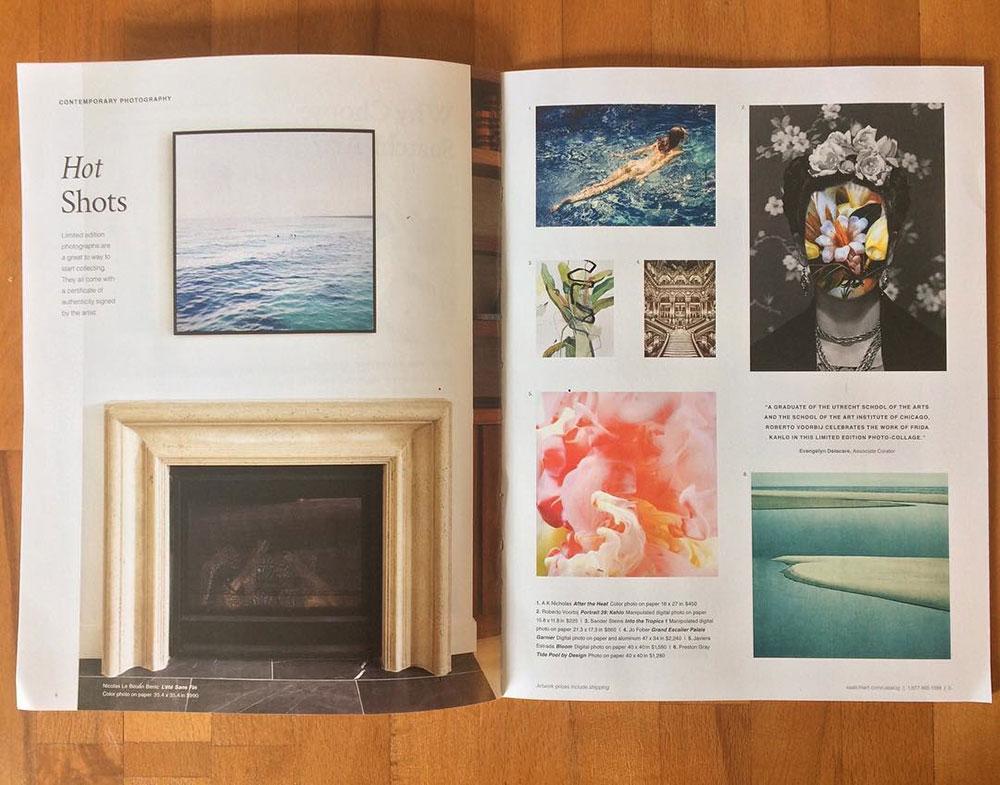
SAATCHI ART - Fall Catalog 2018
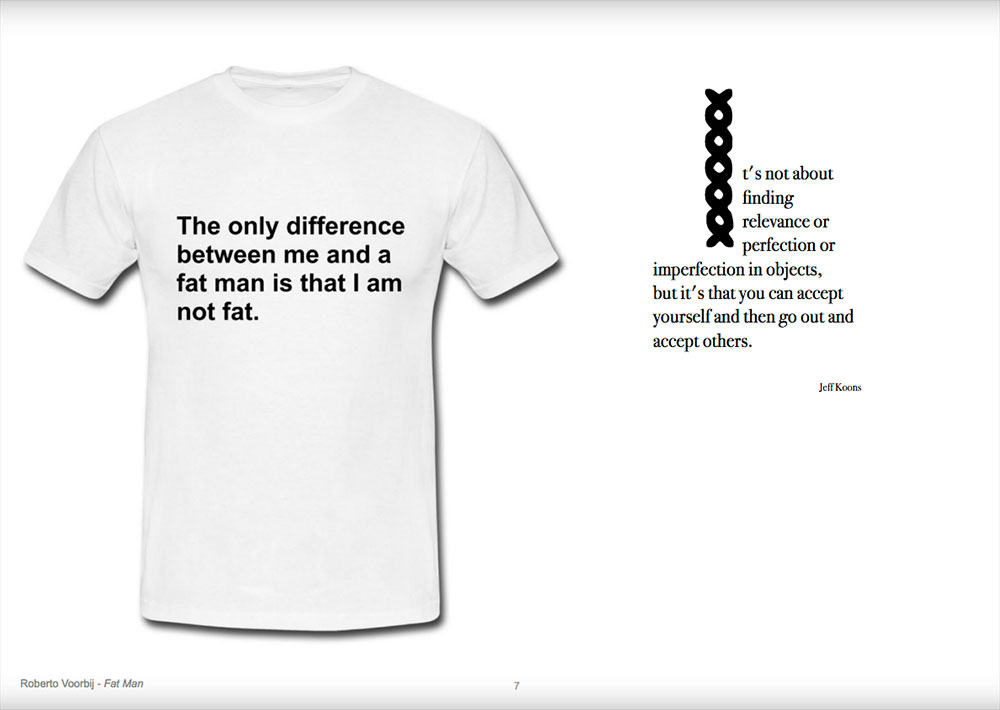
MAKE8ELIEVE MAGAZINE - ISSUE #12: FAT
CANVAS - A blog by SAATCHI ART. Art We Love - Inspiration: Primarily Modern Mondrian, March 07, 2017.
CANVAS - A blog by SAATCHI ART. Art We Love - Cornucopia of Color: See What’s Trending Now, October 17, 2016
Mind the Gap: Sampling and Appropriation as Formal and Ideological Strategies in Roberto Voorbij's Short-Film One Minute Silence
Rüdiger Thomsen Monika Pietrzak-Franger Remix Cultures
21 July 2016
Acknowledgements
The following paper is the result of a collective oral presentation held at the Student Conference on Remix Culture at the University of Hamburg in collaboration with the University of Braunschweig on 2nd July, 2016 as part of the Master's course on Remix Culture supervised by Monika Pietrzak-Franger. In our presentation, Miriam Jörgens has introduced the concept of appropriation as defined by Julie Sanders, and Tanja Ebner has identified the specific techniques of ‘One Minute Silence’. I am deeply grateful to Miriam and Tanja for allowing me to include their observations in this paper. The panel discussion which followed our presentation as well as the in-class discussion on political mashup/remix have also offered useful insights which were, to some extent, taken up in this paper. I would like to thank the course participants for their fruitful contributions which have surely enriched the argument of this paper. Also, I would like to thank Roberto Voorbij, who allowed us to work with his short-film, and who has kindly provided a list of the original source material he used in his remix short-film ‘One Minute Silence’.
1 Introduction
The analysis of this paper builds on the previous seminar paper, which has developed specific criteria for approaching media products in the context of Remix studies. Many of the guiding questions will be taken up: What is the relation between the remixed version and the original source? What is the means of reference and to what extend is the original still recognizable? What is the effect of the new version and does this effect depend upon being able to recognize the original? Does the remix support or challenge the original? What is the role of the respective product for the overall discourse of Remix? While these points will be covered, the main focus of this paper will be on the ideological and political dimension of critical remix practices. The first paper already identified sampling as the fundamental formal and aesthetic principal of remix in general. This second paper will now focus on appropriation as the ideological strategy of certain remix practices. A working definition of appropriation will be derived from one of the most influential publications on the topic by Julie Sanders. This understanding of appropriation will then be contextualized in the field of remix studies.
The established concept and guiding questions will be used for a concrete analysis of the short-film ‘One Minute Silence’ by the Dutch artist Roberto Voorbij, which has only recently been screened at the Short-Film Festival in Hamburg in May 2016. The techniques of cutting and editing will be related to the film’s ideological strategy of appropriation, and the interpretation of the film’s major themes will identify One Minute Silence as an effective example of critical remix.